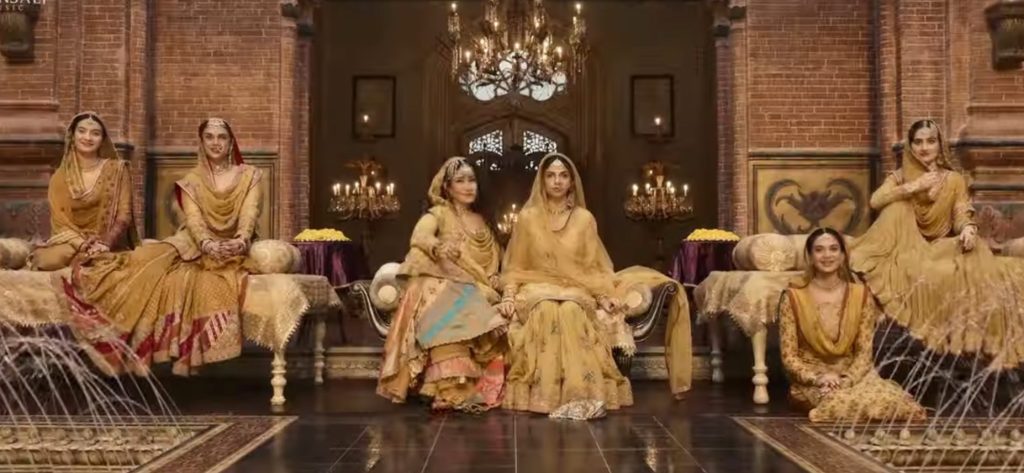
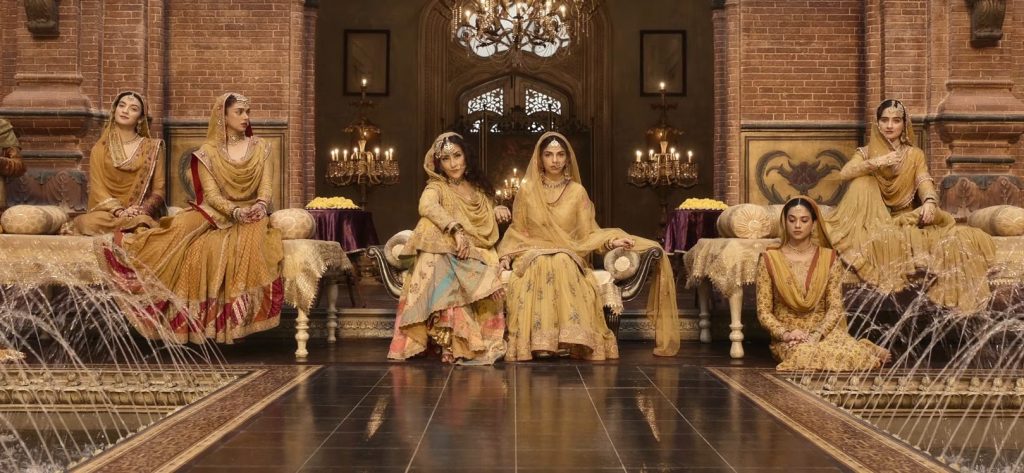
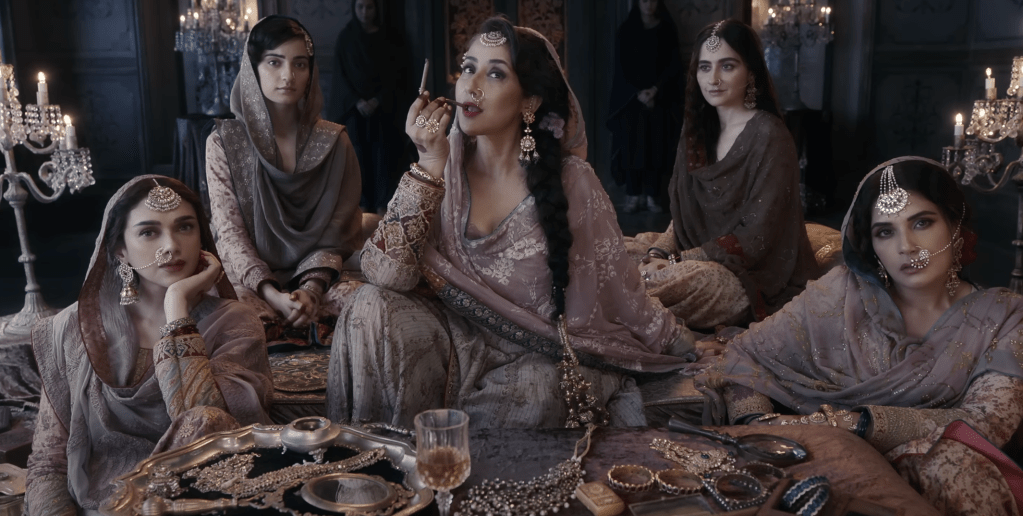
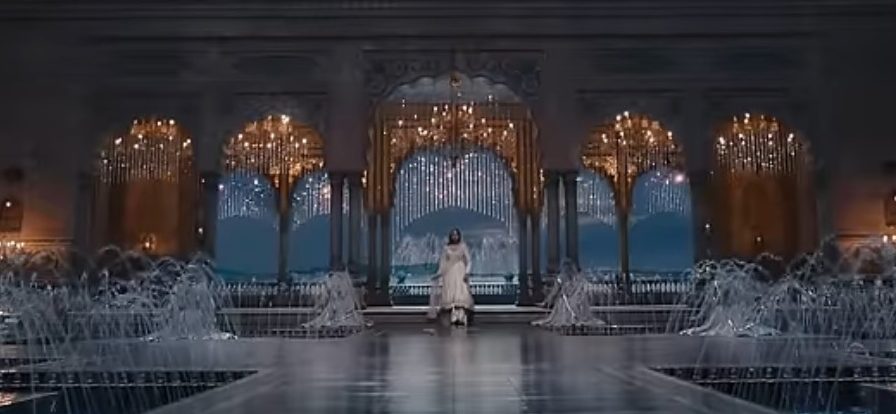
We’re playing catch-up ahead of Heeramandi releasing on 1 May! This was the first song trailer shared and provided a glimpse of the grandeur of this series. In the post, we take a deep dive to the costumes of the main characters.
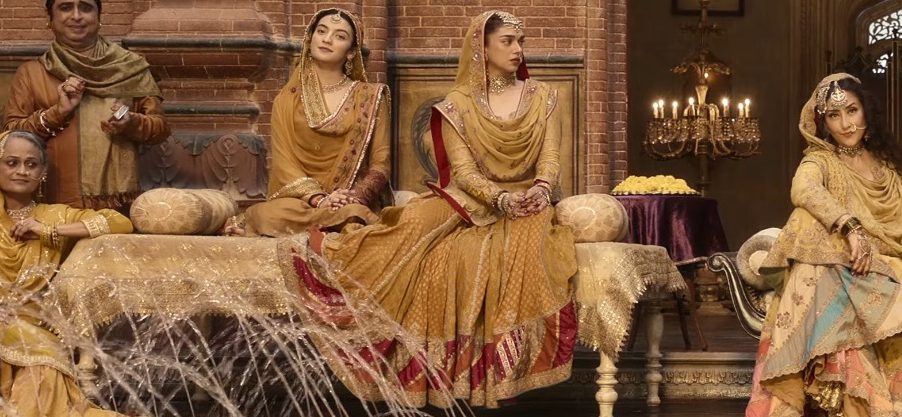
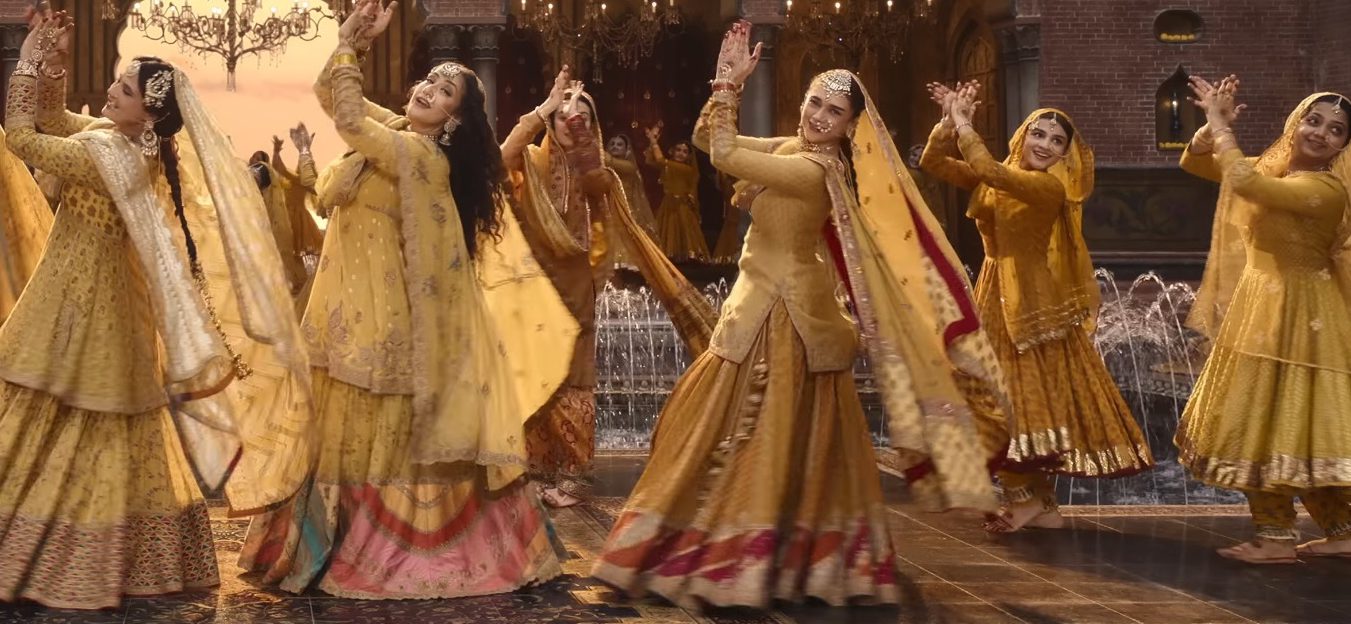
Sakal Ban is a traditional song dating from the 12th-13th century. Written by Amir Khusro, the melody celebrates the coming of spring, in particular the blossoming of the mustard flower – hence the song opening with a visual of mustard “flowers”:
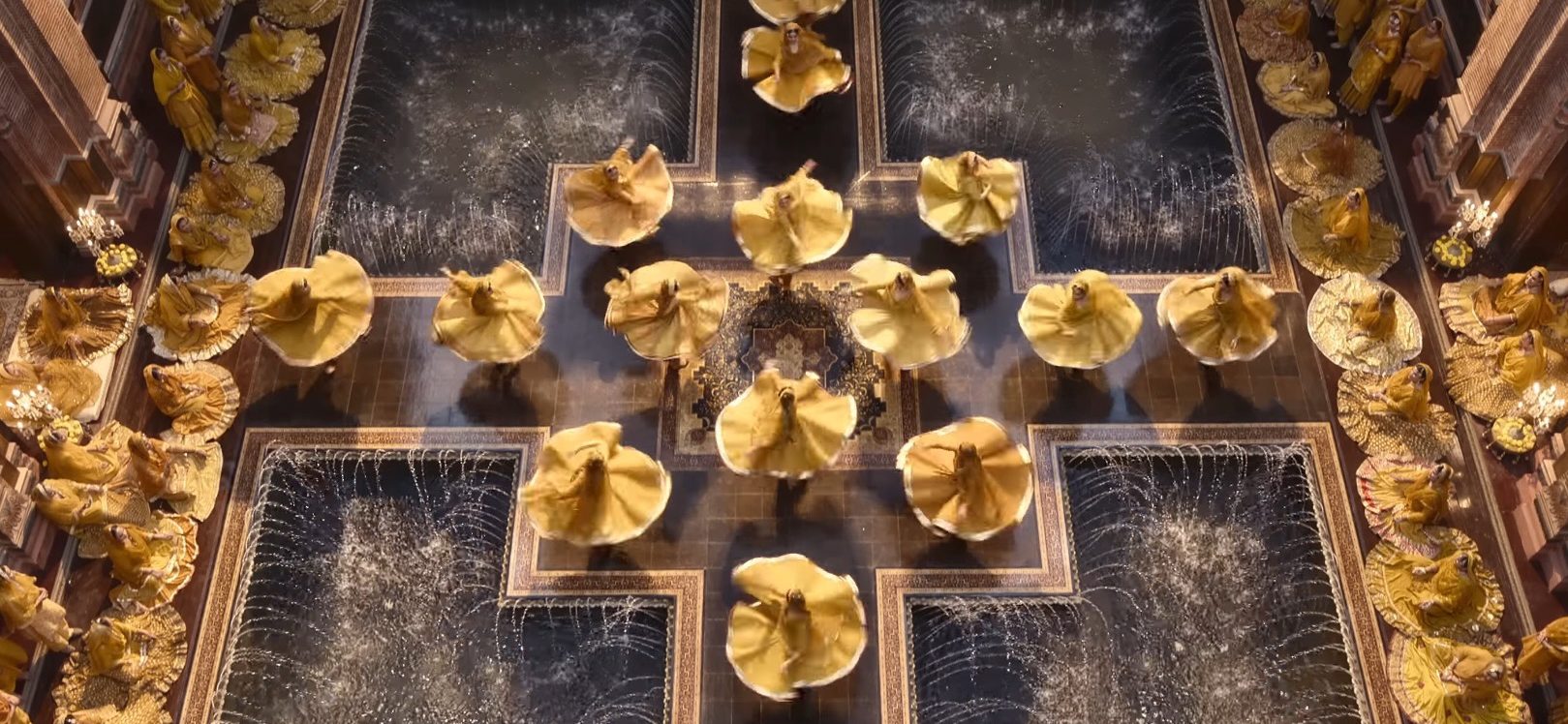
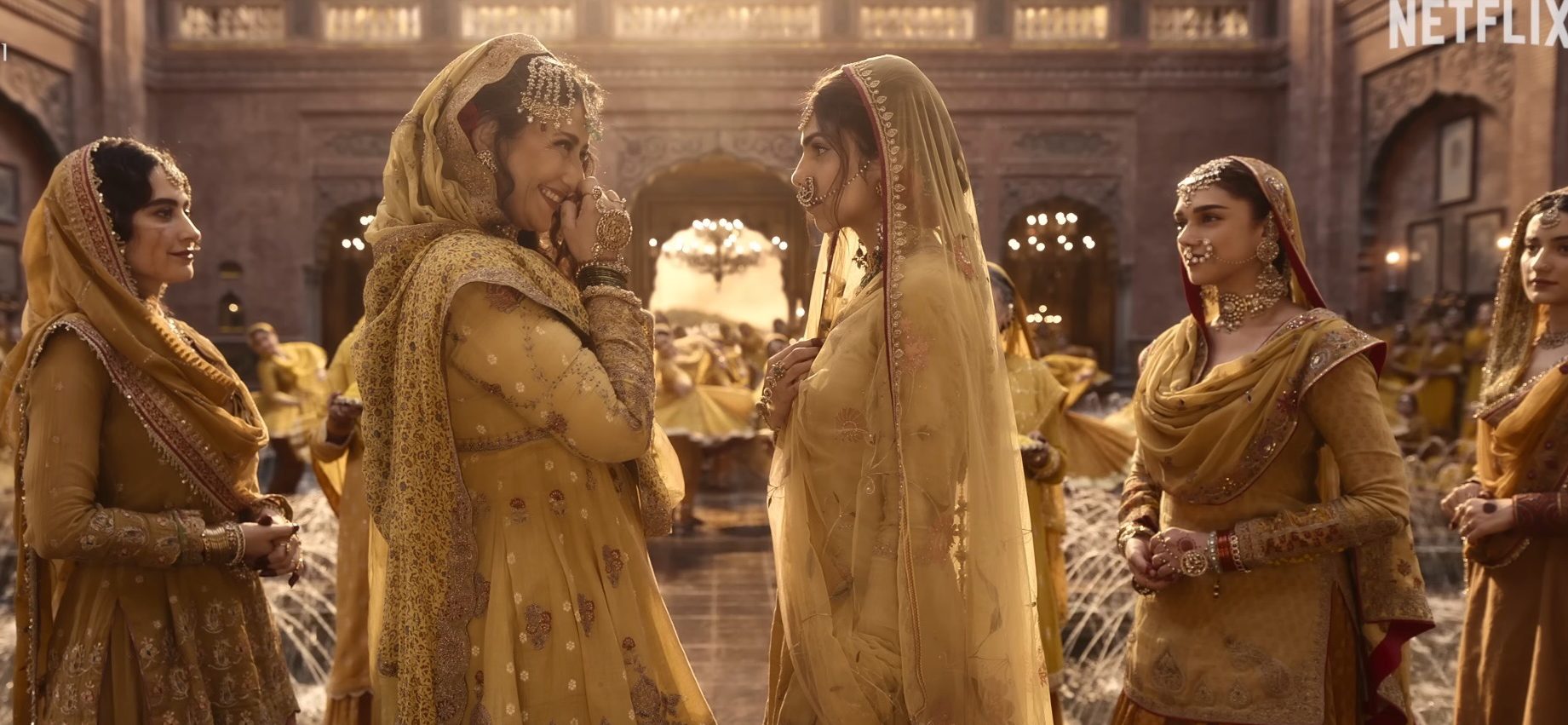
What’s interesting is that everyone is dressed in pretty much the same shade of yellow – this will have made the costume designers’ (Rimple & Harpreet Narula, or RAH) job harder, but they clearly challenged themselves to use a range of textures and embellishments to create distinct looks for each character.
Malikajaan
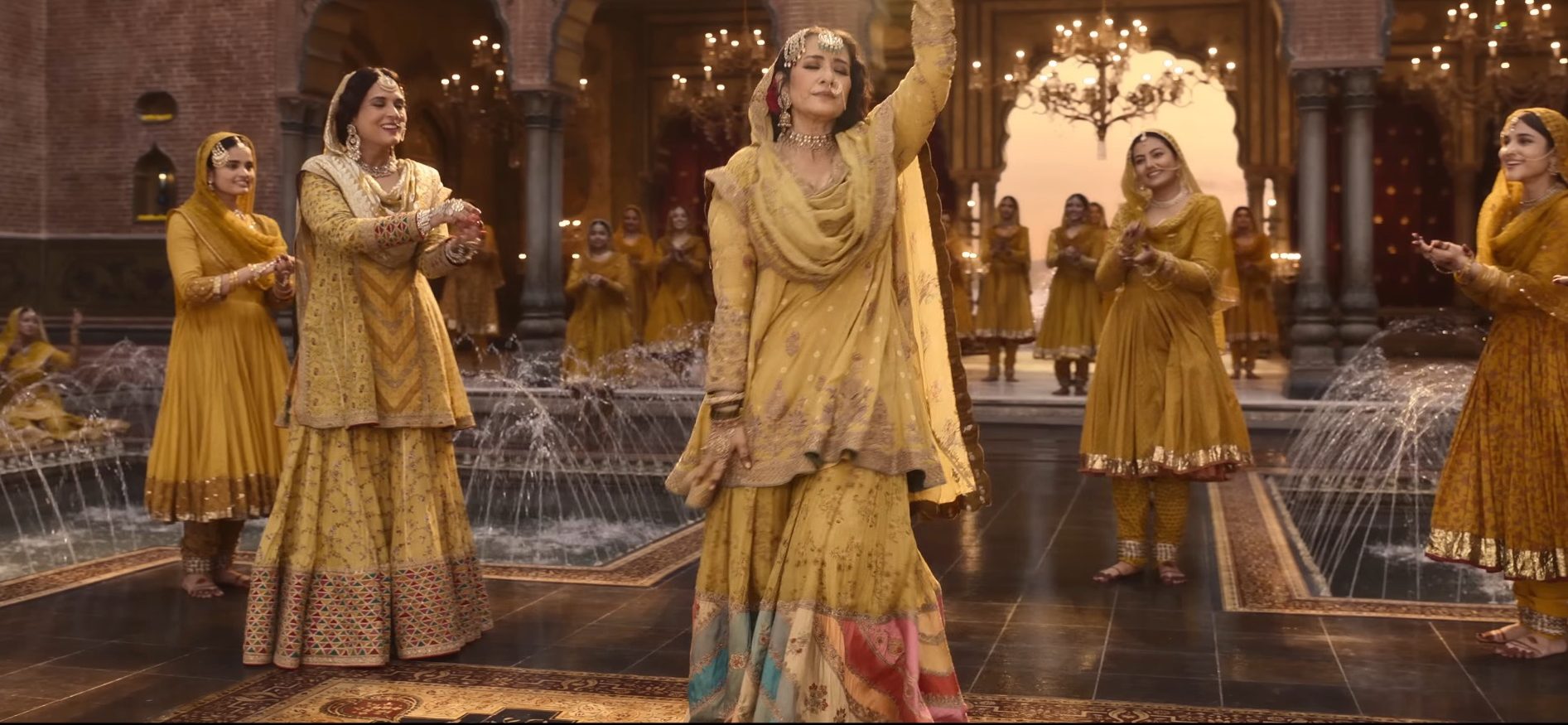
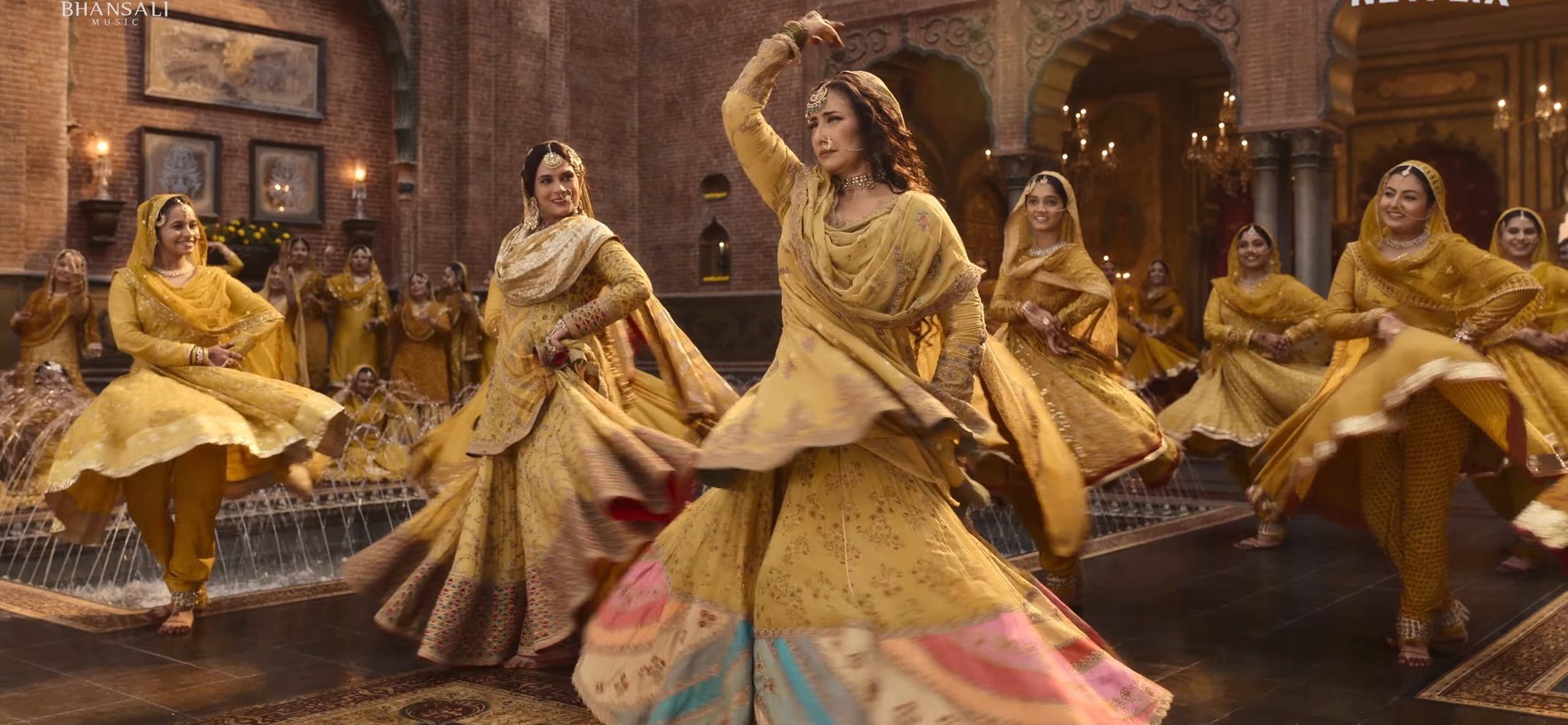
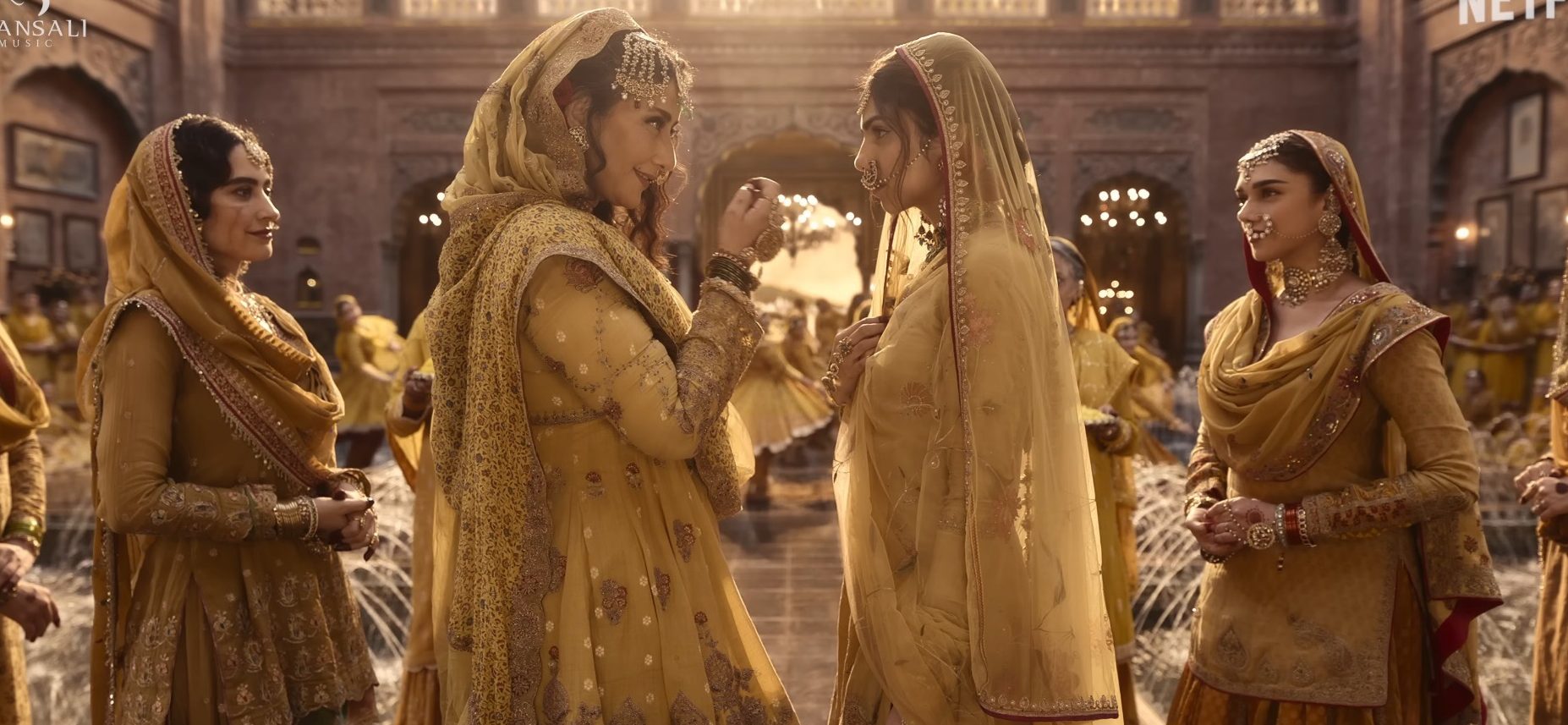
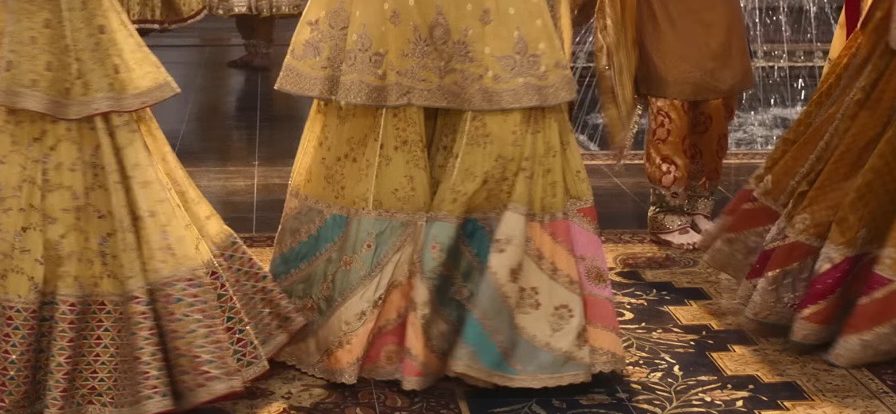
Malikajaan is wearing a sharara with short anarkali on top and dupatta, all with floral prints and embellishments on them. The short anarkali looks like it’s a banarsi fabric with small gold motifs woven in, and then overlaid with printing and embroidery. The sharara is cut in panels with gold gota trim outlining the seams. The hem of the sharara has diagonal strips of silk pieced together and then overlaid with floral embroidery – this is a technique known as “chattapati’ often associated with the city of Lucknow (the setting of Umrao Jaan, a famous novel about a courtesan from the 1840s), so its a nice nod to include that technique here.
Interestingly, her dupatta seems to have two different floral fabrics pieced together in a large triangle shape.
Lajjo
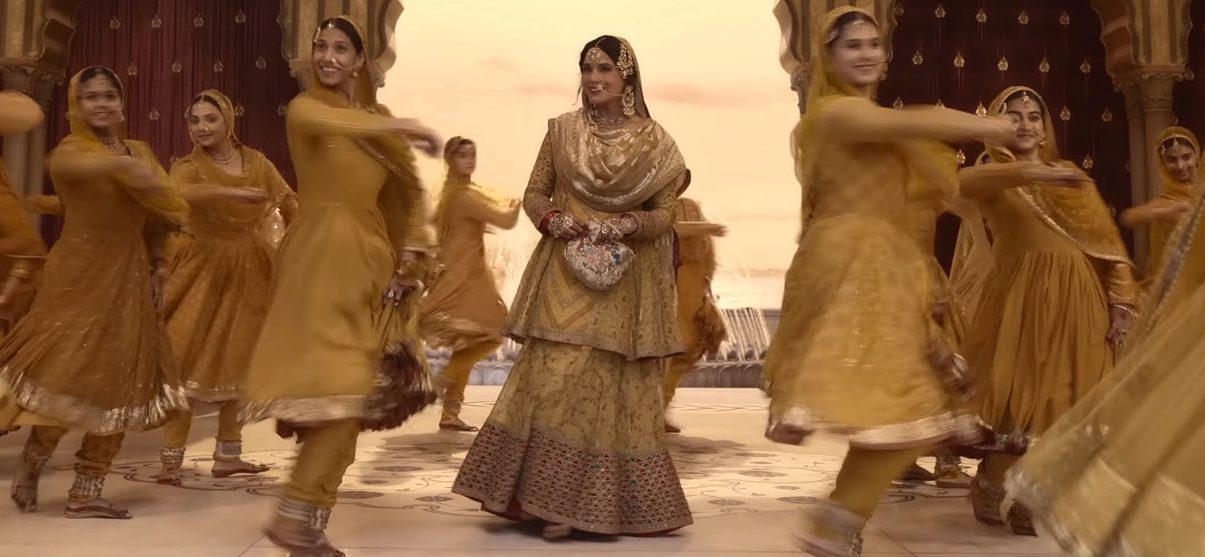
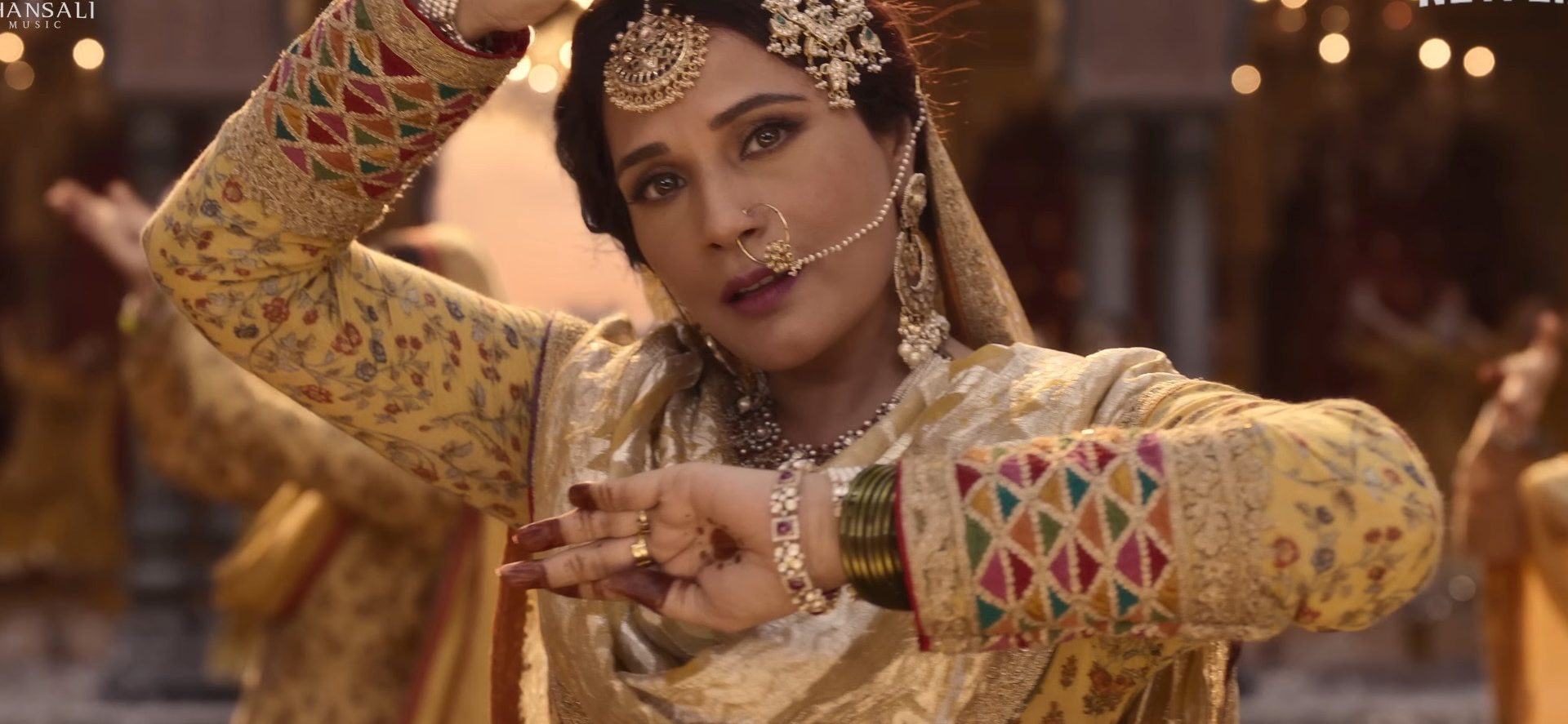
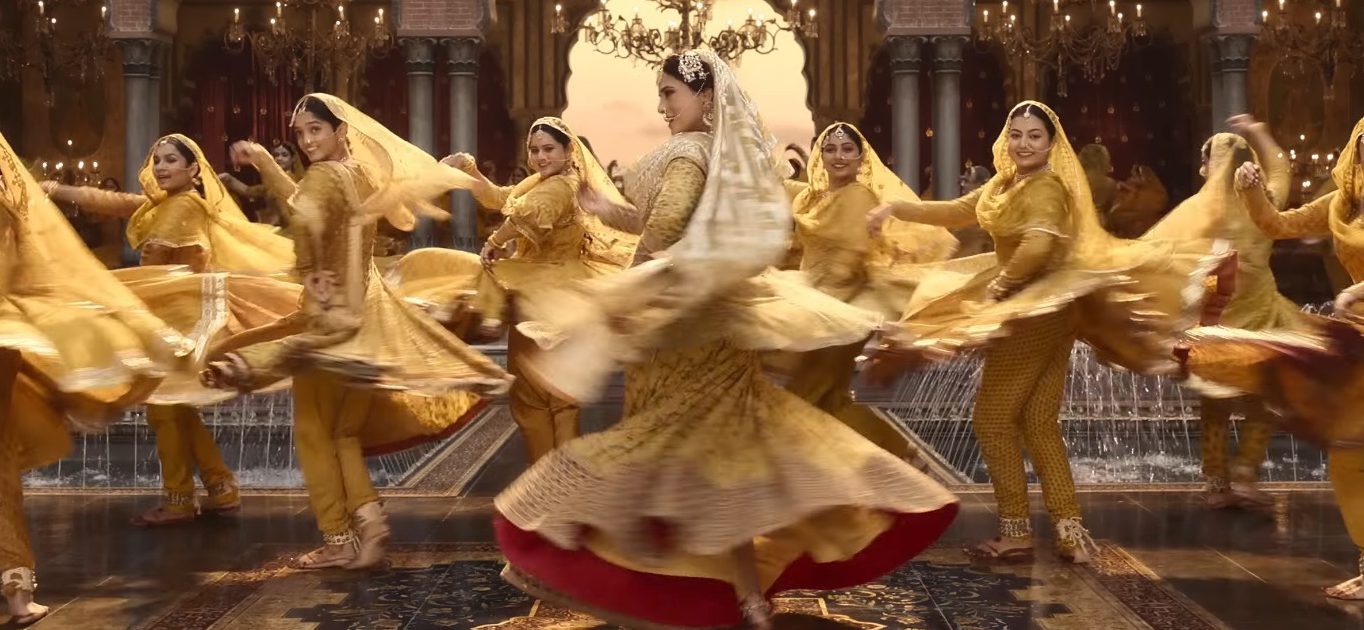
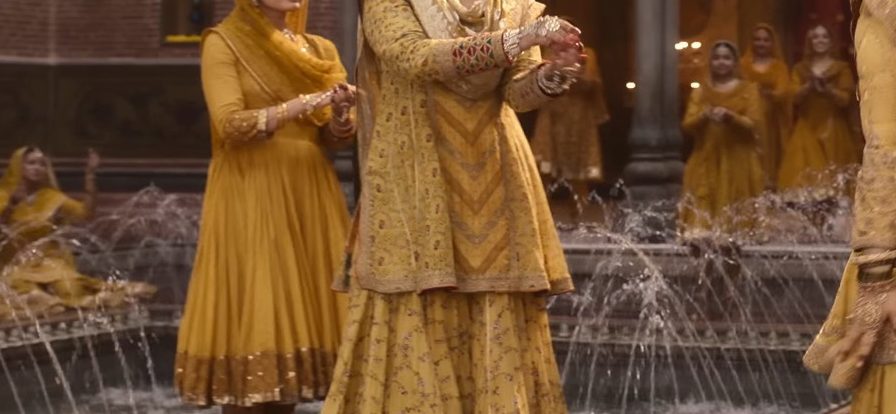
Lajjo is also wearing a sharara with short anarkali and dupatta, very similar in style to the outfit worn by Malikajaan. This suggests that they’re in sync in this scene, with Lajjo possibly enjoying some sort of triumph to do with the sequinned bag she flings at Malikajaan’s feet during the song. This is also reinforced by her entrance coming with the lyrics “malaniya gharwa layi karson” meaning “the gardenerette has brought home a boquet”.
Lajjo’s short anarkali has a slightly different construction to Malikajaan’s, where there are still the side splits you would see on less flared tops. The central panel of the short anarkali is also a different (chevron) print to the florals seen on the rest of the outfit. The cuffs are finished with multicolour chattapati outlined in gold which gives a really nice effect.
The sharara is very similar to Malikajaan’s being cut in panels with the seams outlined in gold gota, and the hem decorated in the same multicoloured chattapati as the sleeves. Interestingly, there is a vibrant red lining on the hem of the sharara, suggesting a flash of something in Lajjo.
The dupatta is a gold and mustard banarsi finished with a pink edging.
Alamzeb
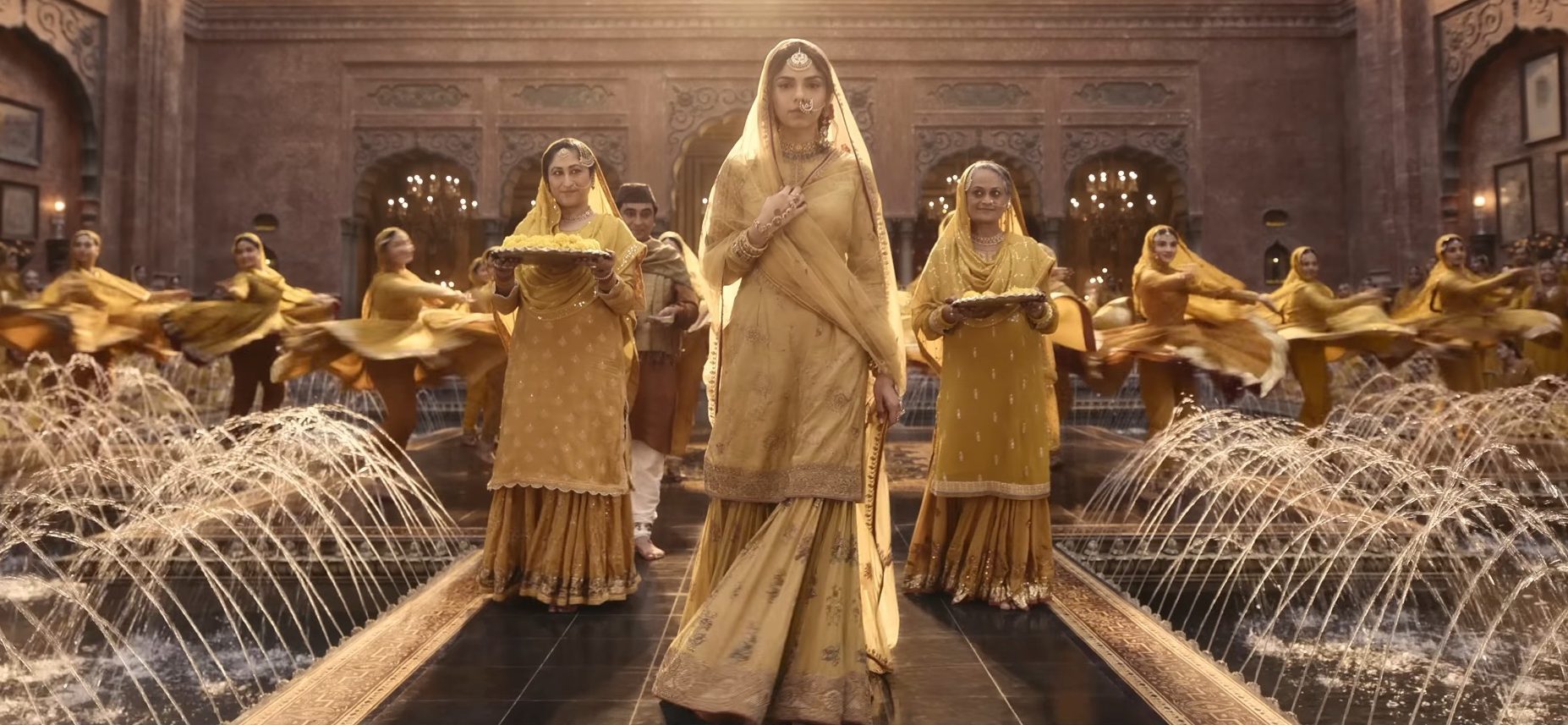
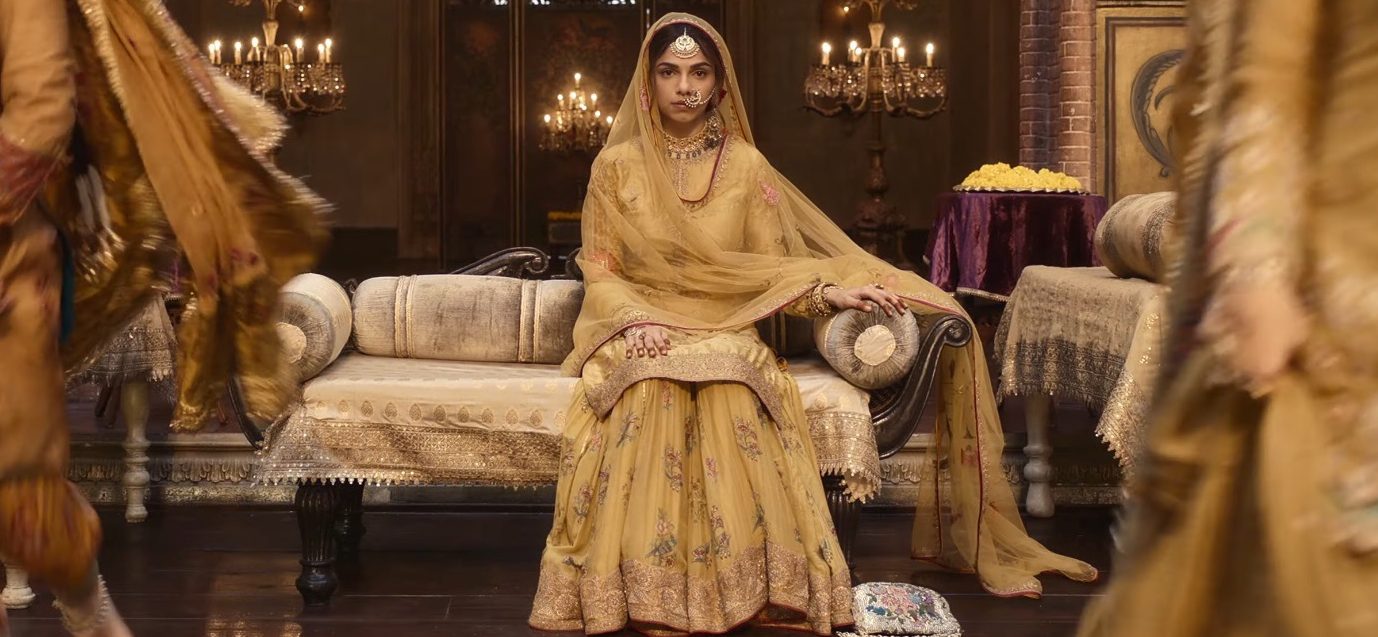
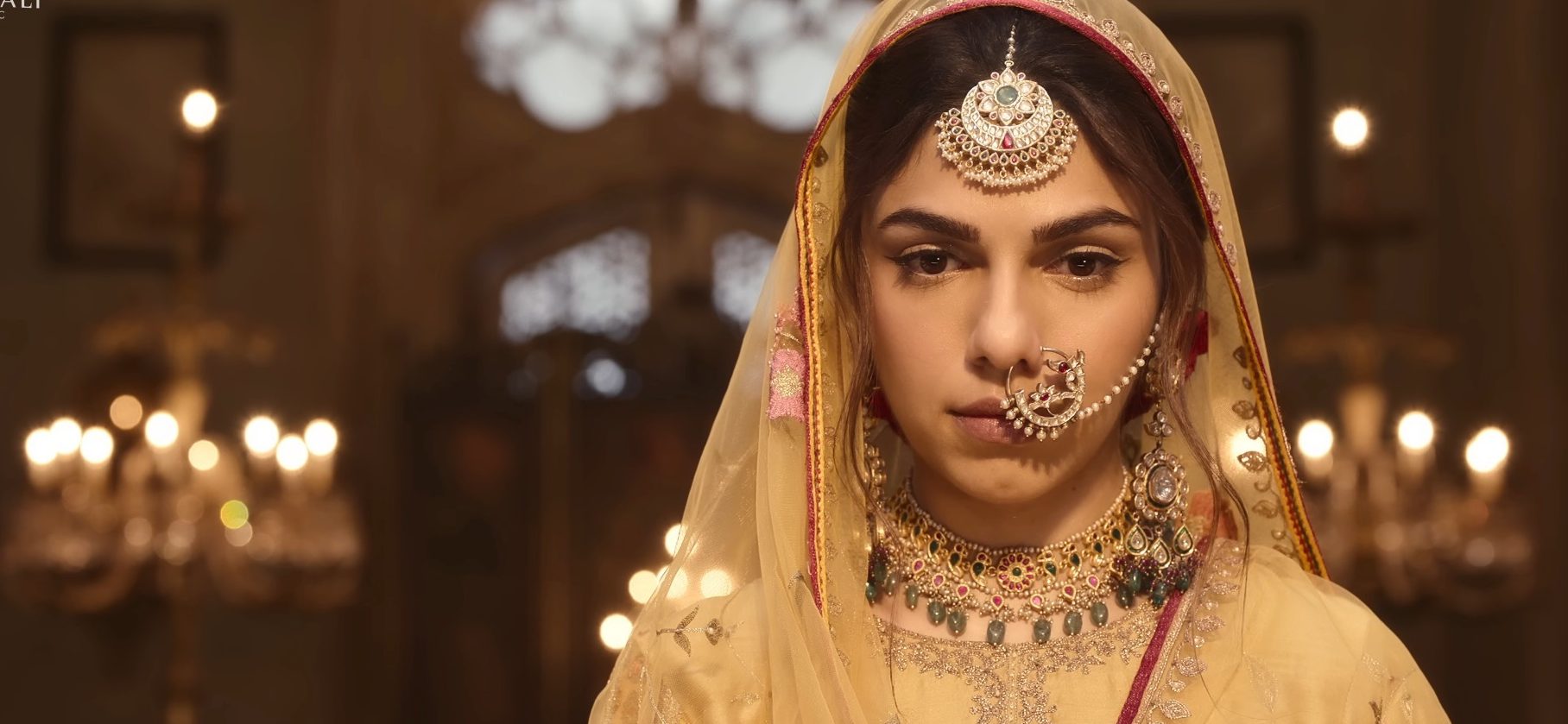
Alamzeb is the only one wearing a gharara (similar to a sharara but with a horizontal seam at the knee with more fabric gathered into it). The gharara is in yet another floral print, with a gold embroidered border around the hem. She’s wearing it with a long kameez (tunic/shirt) with tone-on-tone floral embroidery all over and gold borders on the neck, hem and sleeves. She also has a really nice tulle dupatta with a delicate gold border in marodi (cording) work and a maroon velvet edging, and a training floral design all over.
Bibbojaan
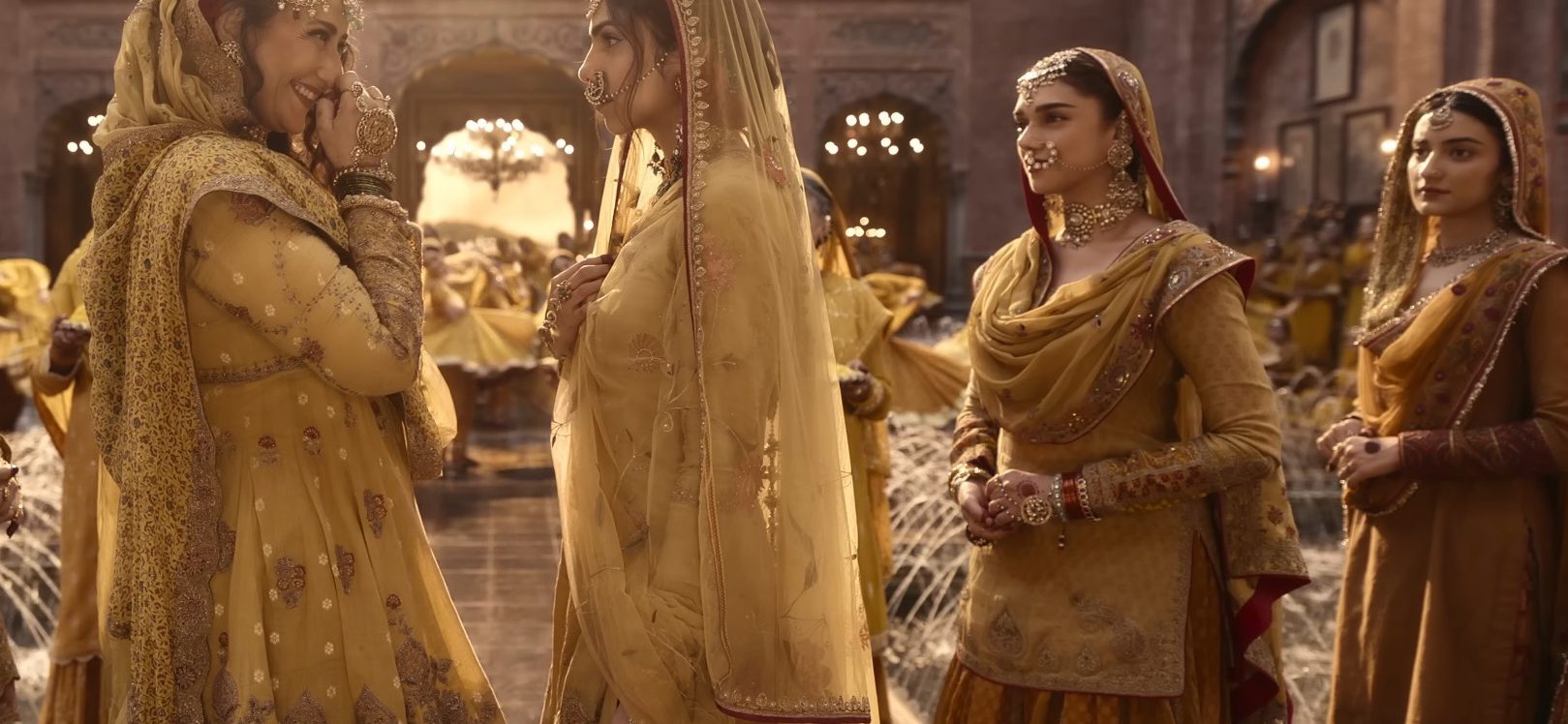
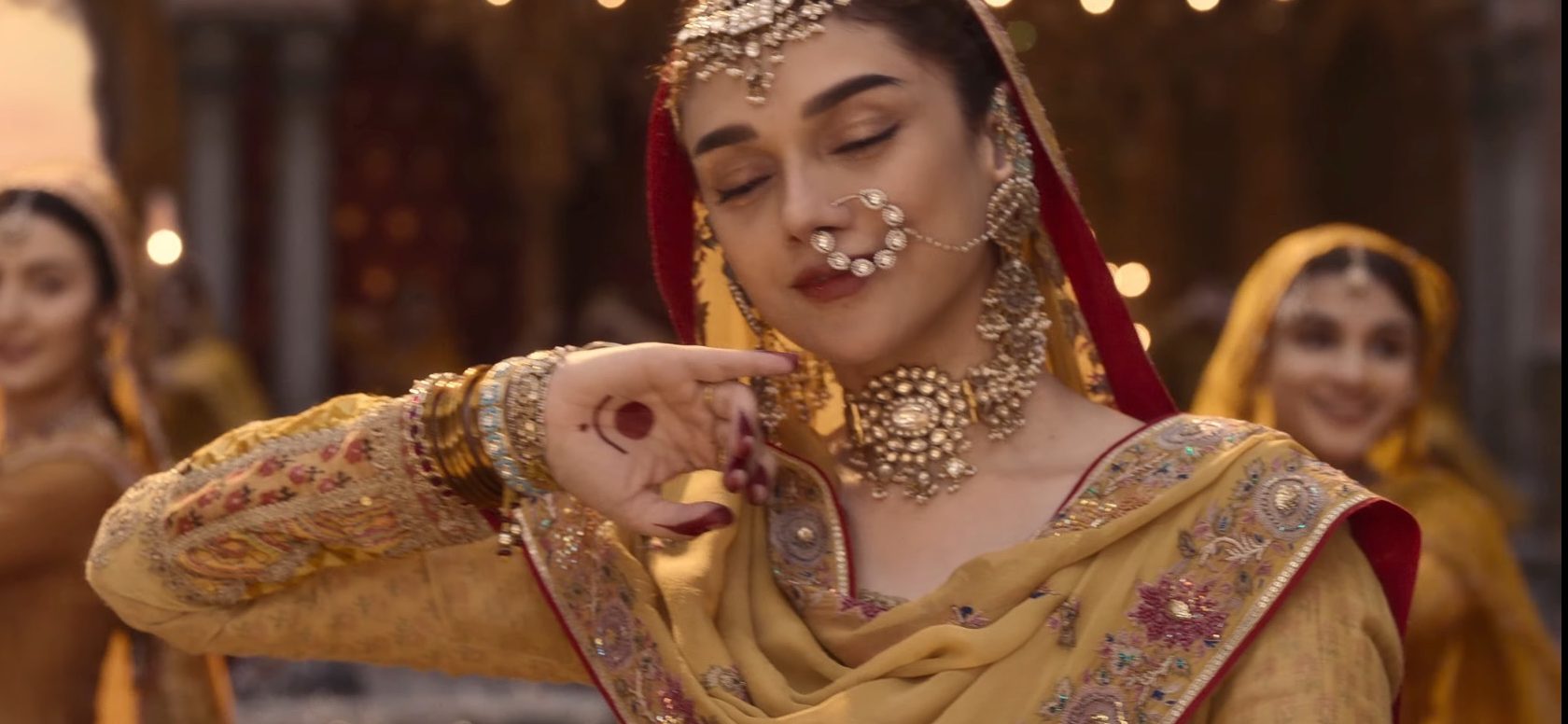
Bibbojaan is wearing a lehenga in a light weight brocade with gold gota on the seams of the panels (a nice tie-in to Malikajaan and Lajjo’s outfits suggesting some unity between the three of them). The hem of her lehenga also features chattapati style patchwork.
Her kurta (shirt) is in a similar boracde to the lehenga, with gold work on the hem and more chattapati on the cuffs of the sleeves. Her dupatta features multicolour floral resham embroidery highlighted in gold – interestingly there are panels added to the shorter ends of the dupatta in a co-ordinating print, but the borders on these pieces are different to the rest of the dupatta suggesting they were added after the dupatta was already made.
Waheeda
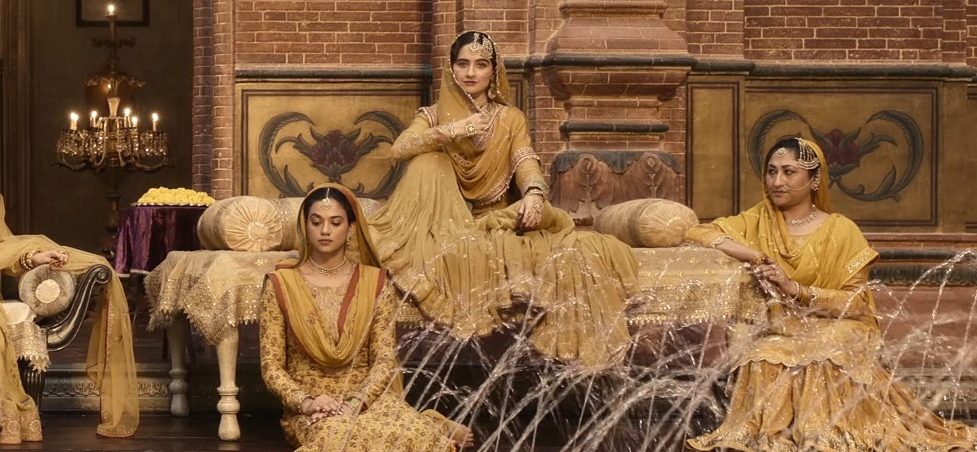
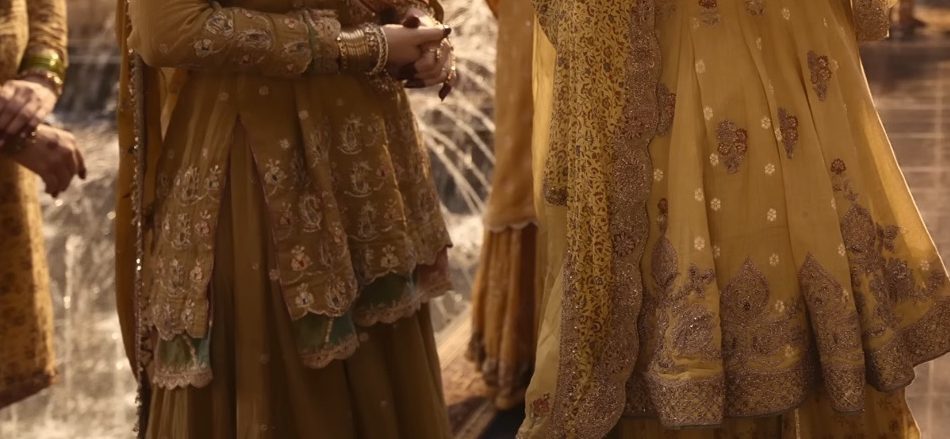
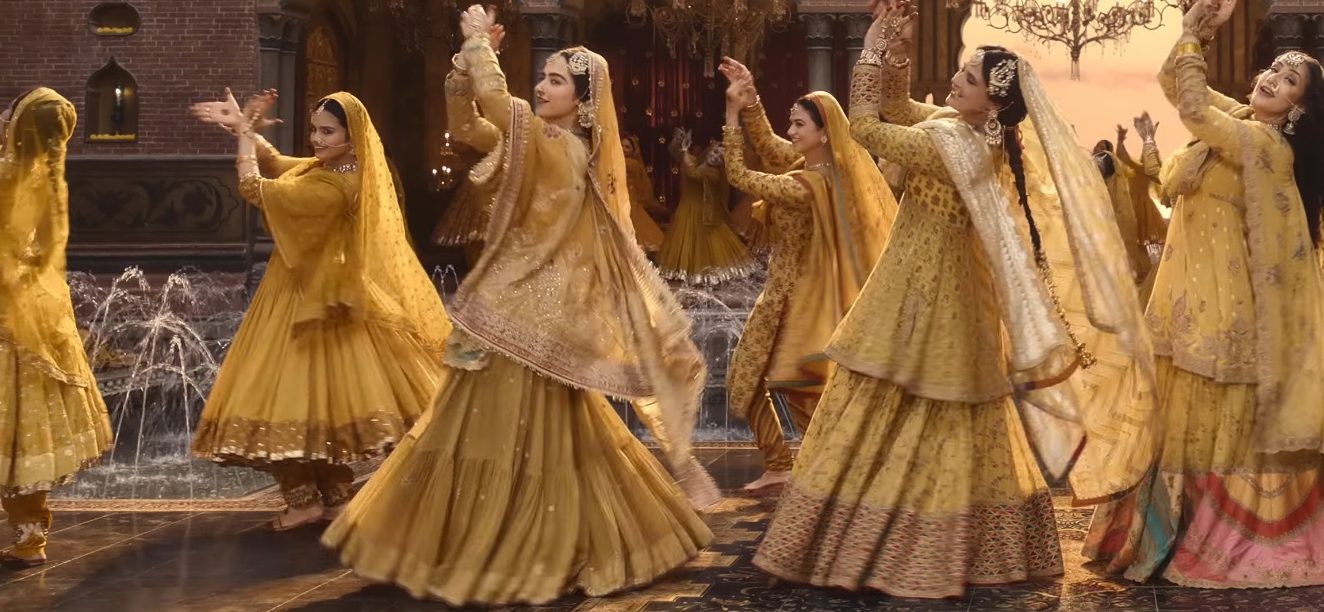
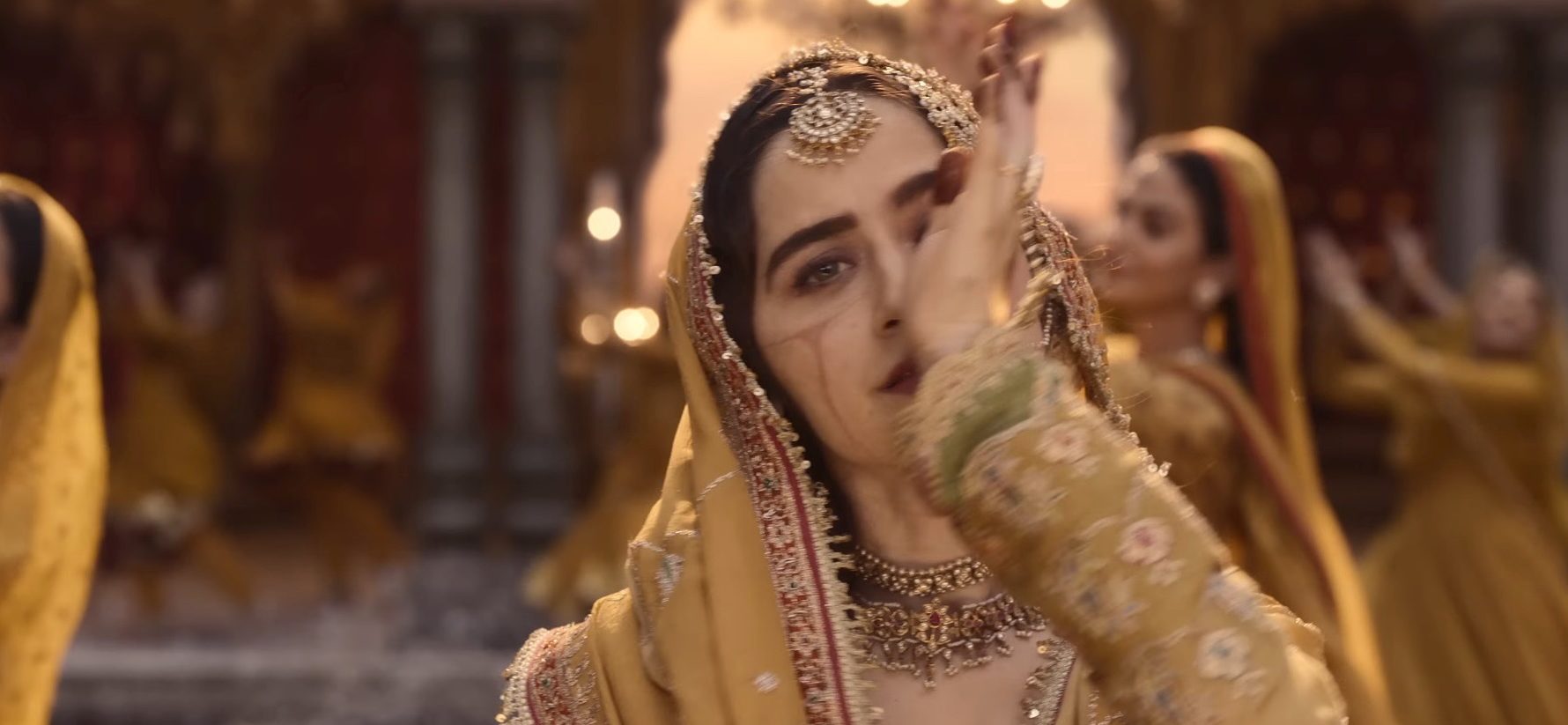
Waheeda is also wearing a lehenga, but her’s has a seam around the calf with more fabric gathered in which gives it the feel of gharara (we’re not sure how historically accurate this is, but we can see the need to add some differentiation in a sea of what could have been similar costumes). Her lehenga is paired with a beautiful kurta that has some layering with organza chattapati at the hem and cuffs of the sleeves. While the chattapati ties in with the other costumes, the fact that it’s layered may hint at Waheeda’s loyalties being in conflict. Her dupatta is in a heavier fabric, with a red gold border, more embroidery on the shorter ends and a small kiran (fringe) edging.
 The Costume Review
Leave a comment